
A closer look at play · Floor time together
Tummy-time play: simple ideas for awake moments
Tummy time is awake, closely supervised play. Try getting down face to face, talking softly, or offering one nearby toy. Keep the turn comfortable and stop when your baby needs a break. Always place babies on their backs for sleep.
By the CradleNote team ·
Sources behind this guide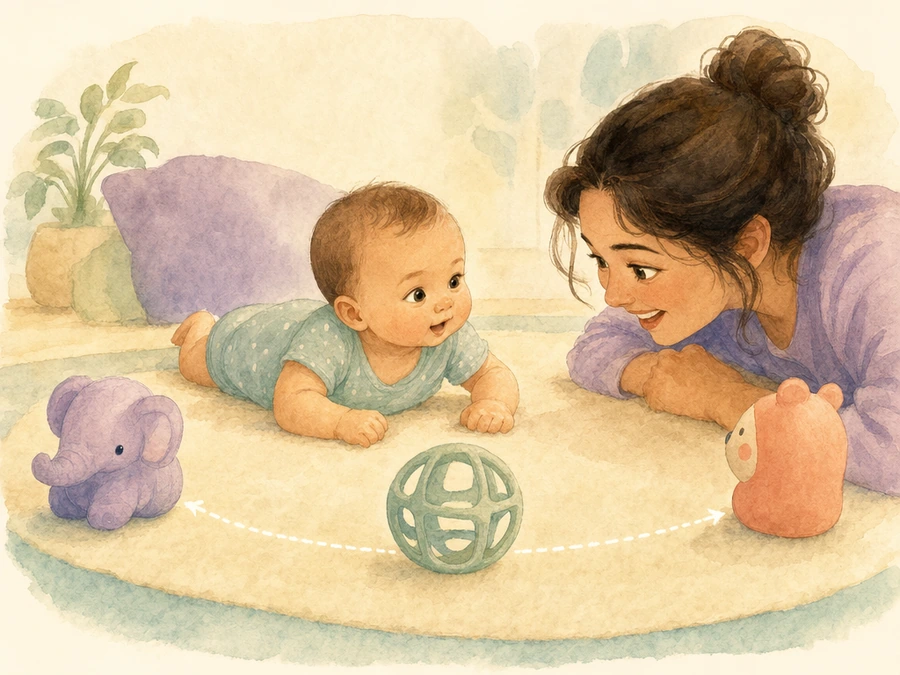
In this guide
Before you start
Use a clear, firm, floor-level play area and remain close enough to help. Choose a time when both of you are awake and your baby is comfortable. Keep the setup free of cords, loose small objects, and unstable props.
Follow your child’s clinician’s guidance if there are individual health or movement needs. These play ideas are not exercises to treat a condition.
Choose one small invitation
Your face is the interesting thing
- Get down near your baby’s eye level. Offer a smile or a quiet hello.
- Wait before adding anything else. You can share a brief moment without introducing a toy.
One toy, close by
- Put an intact, large baby-safe toy where it is easy to see and comfortably nearby.
- Describe what your baby looks at. There is no need to keep moving the toy farther away.
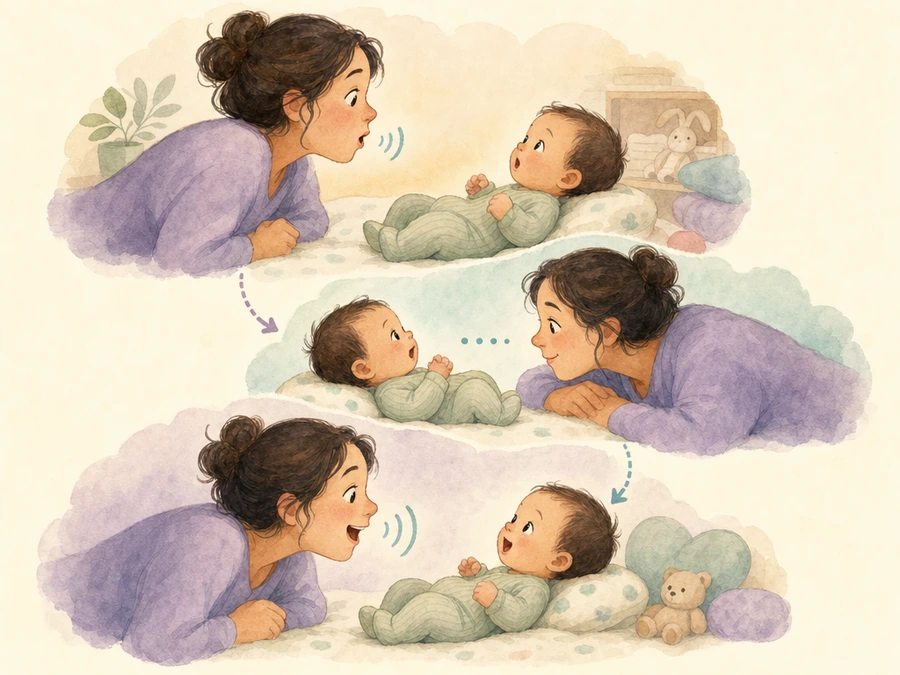
A familiar little sound
- Use a line from a song your baby already hears during the day.
- Pause and notice their response. Finish the song later in a different comfortable position if they need a change.
Let comfort set the end of the turn
Watch your baby rather than a countdown. If they become upset or uncomfortable, help them change position and settle. Trying again later can be more useful than making the current turn longer.
A short turn can be followed by another kind of connection: looking at a book, listening to your voice, or resting together safely. You do not have to finish a sequence. Ask a clinician if tummy play consistently seems painful or you have concerns about movement.
Keep play and sleep separate
The AAP distinguishes supervised tummy play from sleep. Place babies on their backs for every sleep on an appropriate firm, flat sleep surface. Keep toys and loose bedding out of the sleep space.
If you or your baby becomes sleepy, end the activity and move to the appropriate sleep arrangement. Do not use a play position or prop as a way to put your baby to sleep.
Create an account or sign in to save photos, videos, and notes.
A few things you might be wondering
How long should we do tummy time?
Use your clinician’s guidance and the AAP’s age guidance linked below. This page offers ways to share the activity, not a personalized schedule. Build gradually with your baby’s comfort and do not force a longer turn for a photo or a target.
Can I take a photo while supervising?
Ask another adult to take it while you remain engaged, or make a note later. Keep hands and attention available for your baby.
Can we try another activity if today is difficult?
Yes. Pause, settle, and choose a comfortable way to connect. If discomfort persists or you are concerned, speak with your child’s clinician.
A little more to explore
4 months · 5 play ideas
Activities for your 4-month-old
Five gentle activities for a 4-month-old: sound games, easy reaching, short tummy play, songs, and picture-book chats.
Read the guide
6 months · 5 play ideas
Activities for your 6-month-old
Five simple play ideas for your 6-month-old, with step-by-step instructions, everyday materials, and little moments to share with your care circle.
Read the guide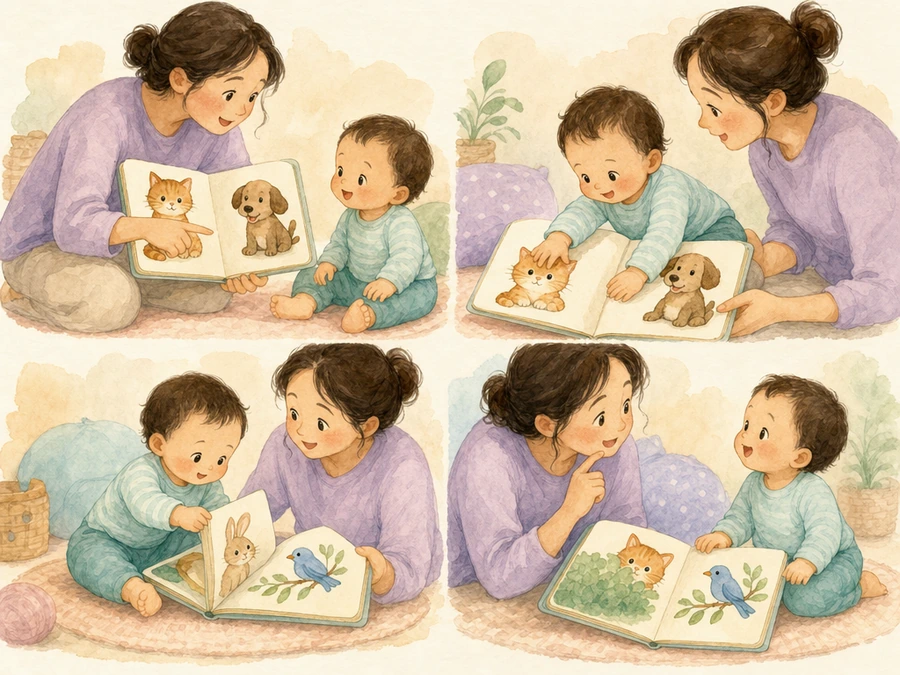
For your care circle · Notice, remember, share
How to record baby milestones when you missed the “first”
Keep useful milestone memories without guessing exact first dates. A simple approach for parents, grandparents, and nannies to share what they actually noticed.
Read the guideMeet CradleNote
One place for the people who care.
Share the day’s care, find activities to try together, and keep the memories your family makes along the way.
Currently free to download and use. Account required. iPhone app requires iOS 17 or later.
Where these ideas come from
Written by the CradleNote team. We combine our Growth catalog with the sources below, adding practical play adaptations and illustrative caregiver notes. Sources inform the guidance; they do not endorse CradleNote. This is educational content, not an individual clinical assessment.
- American Academy of Pediatrics · Back to sleep, tummy to play
Awake, closely supervised tummy play and the distinction from sleep.
- CDC · Milestones by 4 months
The age checkpoint and everyday developmental observations.
Written by the CradleNote team for everyday play and observation. This guide is not a developmental screening tool, a diagnosis, or a treatment plan. Illustrations show play ideas; follow the written safety guidance and your child’s individual needs.
Questions or a correction? Contact the CradleNote team.