
For your care circle · Notice, remember, share
How to record baby milestones when you missed the “first”
Record what you saw, when you saw it, and who was there. If you do not know the first-ever date, say so. A clear observation from today is more useful than an exact date you had to invent, and a photo or video is optional.
By the CradleNote team ·
Sources behind this guide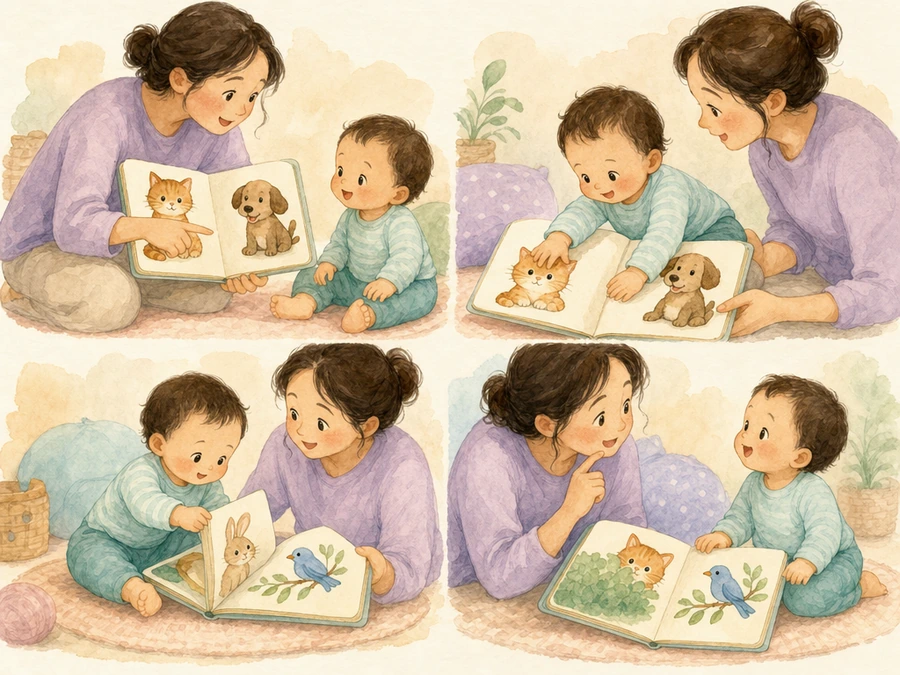
In this guide
Separate “I saw it today” from “it first happened today”
A first-ever date can be hard to know when a baby spends time with several people. You may notice a new-looking action only to hear that a grandparent saw something similar last week. That does not make today’s moment less worth saving.
Use the observation date for something you directly saw. When telling the story, write “I noticed this today” rather than “first time” unless you are confident. If the timing is approximate, keep that uncertainty visible.
Three details make a useful note
You do not need a developmental term before you can save the story. If you later connect it to an activity or milestone, the original description still tells your family what actually happened.
- What happened: describe the action in everyday words.
- The context: mention the activity, setting, or person involved.
- What you know about timing: today, a remembered date, or an approximate period.
“This afternoon, while we looked at the animal book, she pointed toward the cat picture. Grandma remembers a similar moment last weekend; we don’t know which was first.”
Make the camera optional
You can finish the activity before picking up a phone. If another adult is nearby, ask them to capture a moment while you stay engaged. If no one takes a picture, a sentence still preserves the story.
An existing photo may remind you of something you noticed. Add a caption that distinguishes the photo’s date from anything you are recalling approximately. Do not ask your baby to keep repeating a behavior just to get a better recording.
Choose a moment you already have
Try a short conversation during a caregiver handoff: one thing that caught the baby’s interest and one thing worth trying again. You can save a note then, or return to it later. There is no need to account for every activity.
In CradleNote, your invited care circle can keep memories alongside daily care and Growth. When adding media, you can connect it with a relevant activity or milestone. Start with the memory you have; you can still enjoy the guides without creating an account.
“Today’s little thing: he kept bringing the block back to the bowl. Tomorrow: leave the same bowl out for supervised play.”
Keep developmental questions separate from the memory book
If you are concerned about a skill, a missing milestone, or a loss of skills, ask your child’s clinician. Bring whatever observations you have; do not wait to collect a perfect record. A memory collection supports your conversation but does not assess development.
Create an account or sign in to save photos, videos, and notes.
A few things you might be wondering
Should I guess a first date so the record is complete?
No. Keep an approximate date labeled as approximate, or record a date you actually observed the action. An honest gap is better than a date that looks certain but is not.
What if I don’t know which milestone matches the moment?
Write what happened first. Look at the age guide later if it helps, and ask your child’s clinician if you are unsure about developmental meaning. Not every family memory needs a milestone label.
Do ordinary repeated moments count?
Yes. A familiar song with a grandparent or a favorite book with a nanny can be worth keeping even when nothing is new. The people and the experience are part of the story.
A little more to explore
Developmental observations · By 6 months
6-month milestones: what to notice in everyday life
A plain-language guide to the CDC’s six-month developmental checkpoint, with everyday observation notes and a way to record memories without guessing a first date.
Read the guide
Developmental observations · By 9 months
9-month milestones: little observations worth sharing
Explore the CDC’s nine-month developmental checkpoint: expressions, babbling, gestures, object exploration, and sitting, with practical observation examples.
Read the guide6 months · 5 play ideas
Activities for your 6-month-old
Five simple play ideas for your 6-month-old, with step-by-step instructions, everyday materials, and little moments to share with your care circle.
Read the guideMeet CradleNote
One place for the people who care.
Share the day’s care, find activities to try together, and keep the memories your family makes along the way.
Currently free to download and use. Account required. iPhone app requires iOS 17 or later.
Where these ideas come from
Written by the CradleNote team. We combine our Growth catalog with the sources below, adding practical play adaptations and illustrative caregiver notes. Sources inform the guidance; they do not endorse CradleNote. This is educational content, not an individual clinical assessment.
- CDC · Concerned about your child’s development?
Talking with a clinician and seeking developmental screening or early intervention.
- Harvard Center on the Developing Child · Serve and return
Background on responsive, back-and-forth interaction.
Written by the CradleNote team for everyday play and observation. This guide is not a developmental screening tool, a diagnosis, or a treatment plan. Illustrations show play ideas; follow the written safety guidance and your child’s individual needs.
Questions or a correction? Contact the CradleNote team.