
Little moments of play · Around 6 months
Activities for your 6-month-old
Try mirror play, an exchange of funny sounds, reaching toward a favorite toy, naming what catches your baby’s eye, or pausing in a familiar song. Choose one short activity while your baby is awake and comfortable.
By the CradleNote team
One idea is plenty
These are choices, not a daily checklist.
Let your baby lead
Awake, comfortable, and ready for a little play.
For everyone who cares
Easy to try. Lovely to share afterward.
A little inspiration for today
What feels right for this moment?
Start with one that catches your eye. The times are flexible; follow your baby’s interest and take a break whenever they need one.
5 of 5 ideas

Raspberry Remix
A tiny conversation made of silly sounds. Leave a little space for your baby to join in.
You’ll needJust you and your voice
How to play
- Get face to face while your baby is awake and comfortable.
- Make one gentle “brrr” sound, then pause instead of filling the silence.
- If your baby answers with a coo, squeal, or look, respond to that. Let their interest set the pace.
“Brrr! I heard you. My turn?”
Make it easier
Use a familiar, quiet sound. Listening together can be the whole activity today.
What you might notice
A pause, a look toward you, or a sound in response. It doesn’t have to match yours.
Keep it comfortable. Keep sounds gentle. Pause when your baby turns away, seems tired, or becomes uncomfortable.
A little moment to remember · optional
A note about the sound that made you both smile is enough. If another adult is there, they could capture a short clip while you keep playing.
Create an account or sign in to save photos, videos, and notes.

Reach-and-Roll Treasure
One familiar toy becomes a little invitation to look, reach, and move on the floor.
You’ll needOne large, age-appropriate toy
How to play
- Settle together in a clear, firm, floor-level play space while your baby is awake.
- Place the toy slightly to one side, close enough to make reaching inviting.
- Wait and follow their attempt. Bring the toy closer if needed; a look or reach is worth enjoying too.
“There’s your toy. You’re reaching for it!”
Make it easier
Move the toy into easy reach. There is no need to complete a roll or keep trying when it stops being enjoyable.
What you might notice
What catches their eye, which way they reach, or how they shift their body toward the toy.
Keep it comfortable. Stay within arm’s reach on the floor, away from stairs and sharp furniture. Use an intact toy with no small or loose parts. Tummy play is only for awake, supervised time.
A little moment to remember · optional
Tell the next caregiver which toy caught their attention. You can write the note after play so your hands stay free.
Create an account or sign in to save photos, videos, and notes.
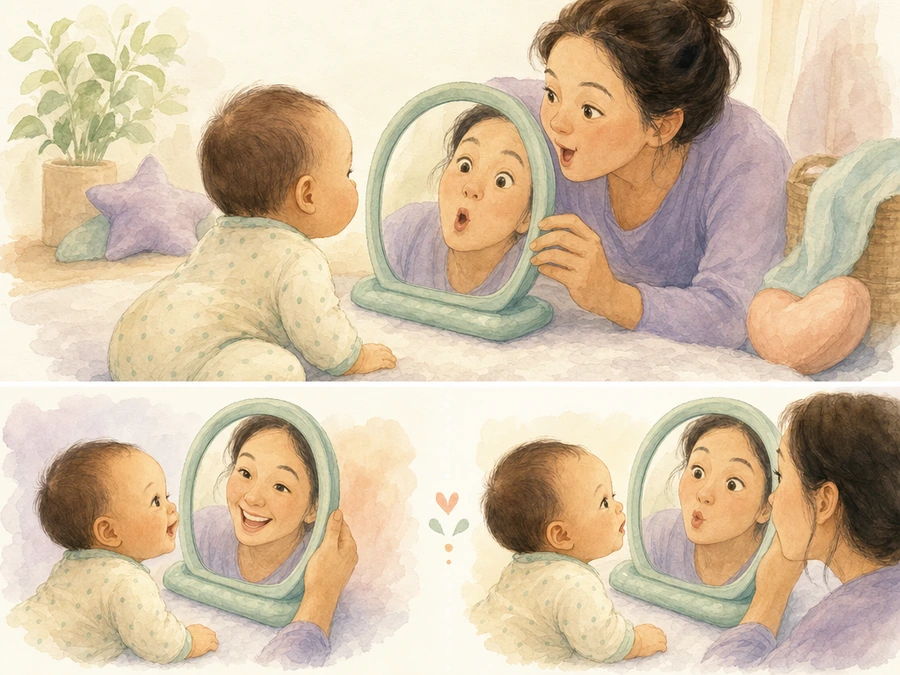
Mirror Face Parade
Make a happy face, a surprised face, or simply enjoy seeing the two of you together.
You’ll needA secure, unbreakable baby-safe mirror
How to play
- Position the mirror securely where your baby can see both faces, supporting your baby as needed.
- Make one expression and give it a simple name: happy or surprised.
- Pause to see what interests your baby. Repeat that expression or follow their gaze.
“There’s your smile. And there’s mine!”
Make it easier
Start with your own familiar face. Add the mirror only if your baby seems interested.
What you might notice
Looking, smiling, or reaching toward the reflection. Enjoy the reaction without expecting them to recognize themselves.
Keep it comfortable. Use a securely framed, unbreakable mirror, keep it stable, and supervise throughout.
A little moment to remember · optional
Remember the expression that got a reaction. A second caregiver can take a photo while you stay close and involved.
Create an account or sign in to save photos, videos, and notes.

Name What Baby Sees
Let your baby choose the subject. The things already around you are a place to start.
You’ll needWhatever has caught their eye
How to play
- Notice what your baby is looking at during an ordinary moment together.
- Name it, then add one small detail: “Tree. The leaves are moving.”
- Pause. If their attention shifts, follow along rather than bringing them back to your topic.
“You spotted the cup. A blue cup.”
Make it easier
Use just the name. You don’t need a running commentary or a response to every word.
What you might notice
The sights they return to, and any glance or sound they share with you.
Keep it comfortable. Keep your baby safely supported and supervised. Looking at an object does not mean it is safe to handle or mouth.
A little moment to remember · optional
Leave a tiny discovery for your circle: “The leaves outside the window were the favorite today.”
Create an account or sign in to save photos, videos, and notes.

Song With a Surprise Pause
Take a song you already sing and leave a small opening for your baby’s contribution.
You’ll needA familiar song, in any language
How to play
- Choose a short, familiar song and sing at a comfortable volume.
- Pause briefly before a repeated word or phrase.
- Welcome any look, wiggle, or sound, then finish the line. You can finish it even if your baby simply listens.
“You joined in! Let’s sing it again.”
Make it easier
Sing normally, without the pause. A familiar voice can be plenty to enjoy.
What you might notice
A moment of attention during the pause, or a response when the familiar line returns.
Keep it comfortable. Keep the volume gentle and your baby comfortably supported. Stop or change activities when they disengage.
A little moment to remember · optional
Share the song with the next caregiver. Your family may end up with a little favorite everyone knows.
Create an account or sign in to save photos, videos, and notes.
Notice the little things, without making play a test.
Everyday play can give you a chance to notice looking, reaching, and back-and-forth sounds. Describe what happened without treating the activity as a milestone test. Our six-month milestone guide explains the age checkpoint in more detail.
Enjoying an activity doesn’t establish a milestone or assess development. Share concerns or any loss of skills with your child’s clinician. You can record what you saw today even if you don’t know when it first happened.
See the CDC’s 6-month developmental guideBring your people into the moment
A small note can make someone’s day.
A grandparent, nanny, or partner can pick up the same idea later. Share the activity and what your baby enjoyed. A photo or video is lovely when it’s practical, and a sentence counts too.
An example from a day together
“We tried the mirror after her nap. She watched my surprised face, then gave me the biggest smile. Try it together later!”
Something you tried. Something you noticed. Enough to bring the next person in.
A few things you might be wondering
Do we need to do all five activities every day?
No. Choose one that fits the moment, or come back another day. The times are flexible ideas from our activity catalog, not daily targets. A short exchange that your baby enjoys is a good place to stop.
What if my baby isn’t interested?
Pause and respond to what they need. You might try a quieter version later, repeat something familiar, or leave the activity for another day. These are invitations to spend time together, with no result to achieve.
Does enjoying an activity mean a milestone is achieved?
An activity and a milestone are different. Record what you actually noticed without treating the activity as a test. If you are concerned about development or notice a loss of skills, speak with your child’s clinician.
What can grandparents or a nanny share afterward?
The activity you tried, what caught the baby’s interest, and whether they seemed ready for a break. A sentence is useful; a photo or video is optional. You don’t need to know whether it was the very first time something happened.
A little more to explore
Developmental observations · By 6 months
6-month milestones: what to notice in everyday life
A plain-language guide to the CDC’s six-month developmental checkpoint, with everyday observation notes and a way to record memories without guessing a first date.
Read the guideA closer look at play · Faces & connection
Mirror play for babies: three simple ways to try it
A practical guide to baby mirror play: a safe setup, three gentle games, ways to follow your baby’s interest, and a moment to share afterward.
Read the guide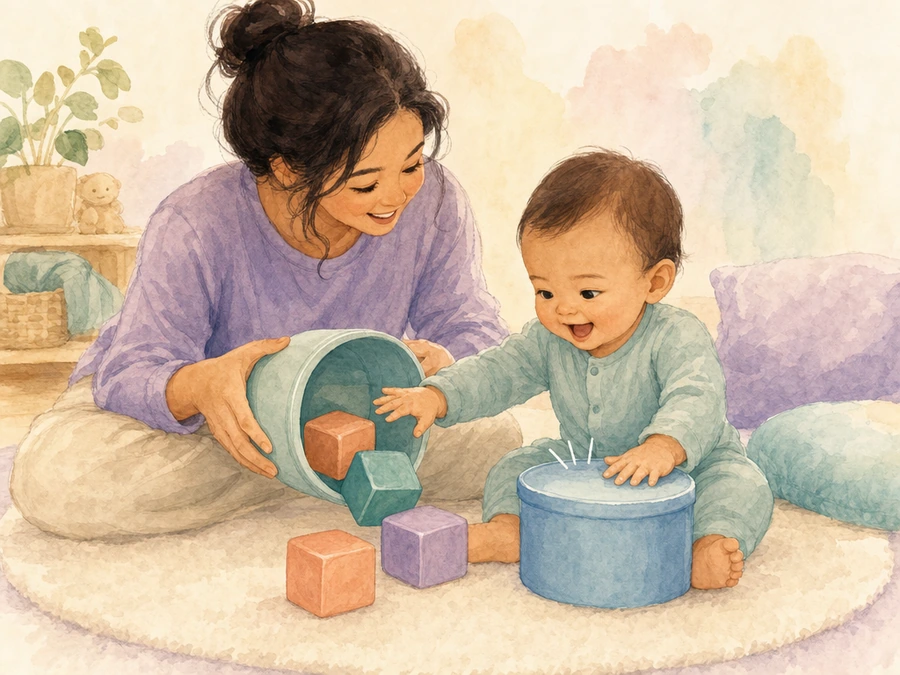
9 months · 5 play ideas
Activities for your 9-month-old
Five simple activities for a 9-month-old, including toy hide-and-find, container play, babbling, taking turns, and supported floor play.
Read the guideKeep the little moments connected
More ideas for your baby. More moments for your circle.
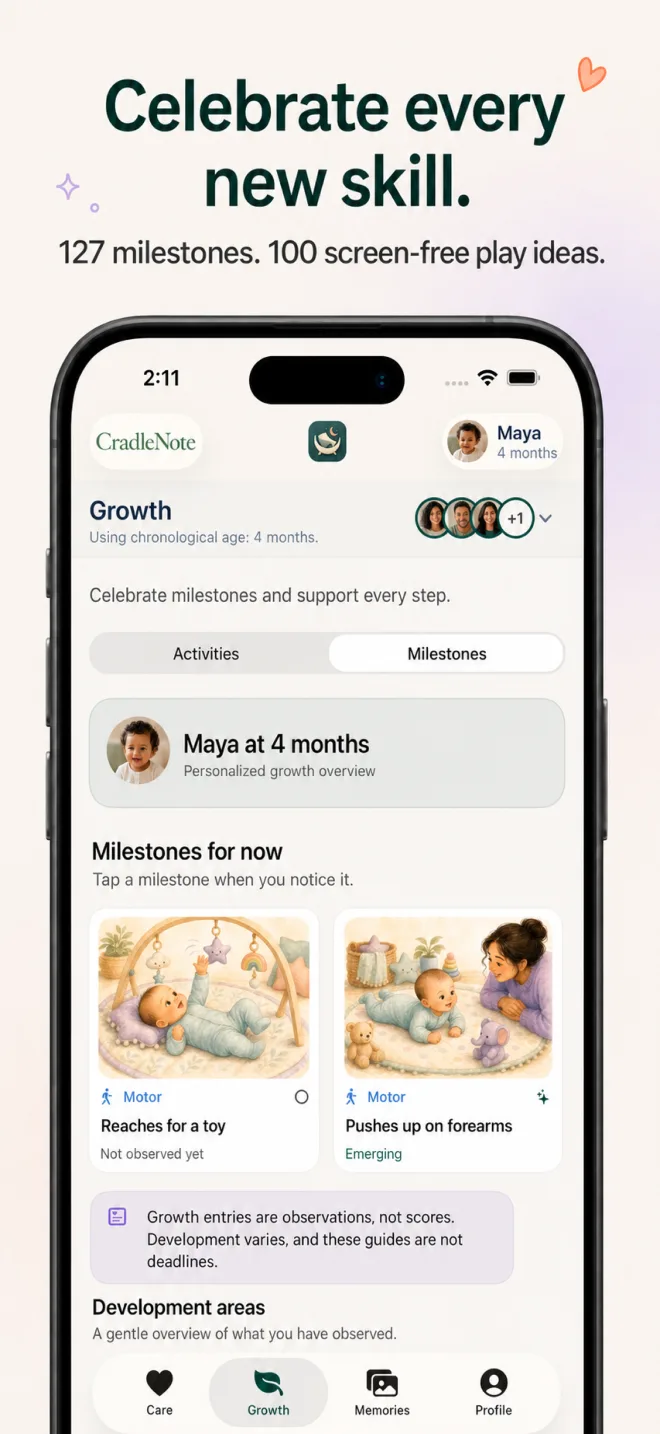
CradleNote brings age-appropriate activities, milestone observations, daily care, and private family memories into one shared place. Everyone you invite can contribute to the story.
Currently free to download and use. Account required. iPhone app requires iOS 17 or later.
Where these ideas come from
Written by the CradleNote team. We combine our Growth catalog with the sources below, adding practical play adaptations and illustrative caregiver notes. Sources inform the guidance; they do not endorse CradleNote. This is educational content, not an individual clinical assessment.
- CDC · Milestones by 6 months
Developmental observations and ideas for everyday play.
- Harvard Center on the Developing Child · Serve and return
The principle of responsive, back-and-forth interaction.
- American Academy of Pediatrics · Back to sleep, tummy to play
Awake, supervised tummy play and safe-sleep distinctions.
Written by the CradleNote team for everyday play and observation. This guide is not a developmental screening tool, a diagnosis, or a treatment plan. Illustrations show play ideas; follow the written safety guidance and your child’s individual needs.
Questions or a correction? Contact the CradleNote team.