
A closer look at play · Faces & connection
Mirror play for babies: three simple ways to try it
Use a secure, unbreakable baby-safe mirror and stay close. Begin with both faces in view, name one expression, then pause for your baby’s response. Watching a reflection is enough; recognizing themselves is not the goal.
By the CradleNote team ·
Sources behind this guide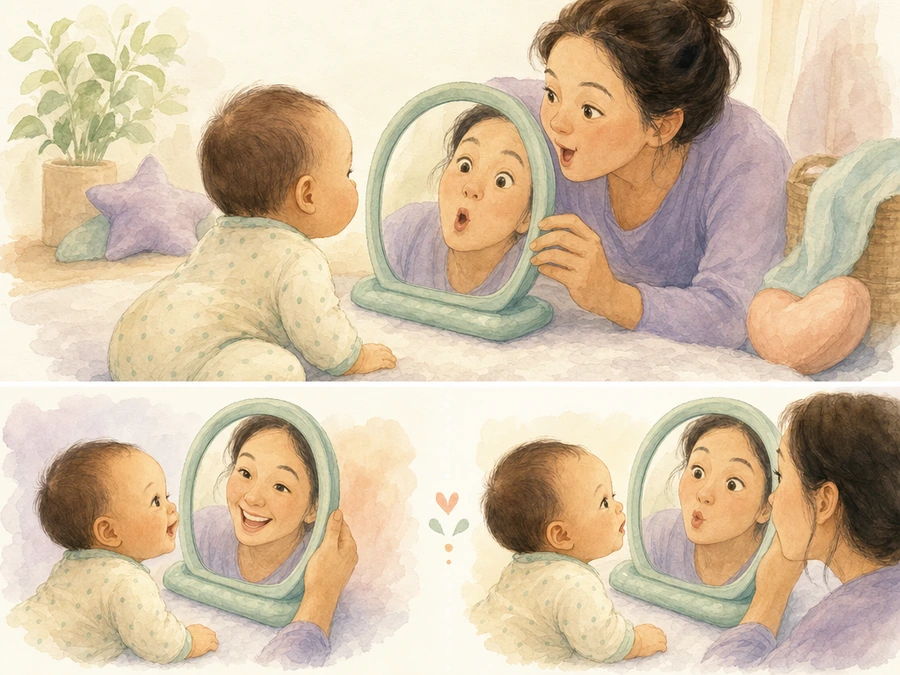
In this guide
Start with a safe, simple setup
Choose a securely framed, unbreakable mirror designed for babies. Check its edges and attachment before each use. Keep it stable and support your baby as needed; avoid balancing a household glass mirror nearby.
Arrange things so you can see your baby and respond comfortably. If the mirror is on the floor, stay at floor level together. Use the position your baby is comfortable in today, rather than positioning them to produce a particular reaction.
Three ways to play
1. A familiar hello
- Bring both faces into view. Say hello to your baby and point to your own reflection.
- Pause and follow their gaze. Repeat only if they seem interested.
2. One face at a time
- Make a gentle smile or a surprised expression and name it.
- Let your baby look, move, or make a sound. Answer that response before changing your expression.
3. A little sound exchange
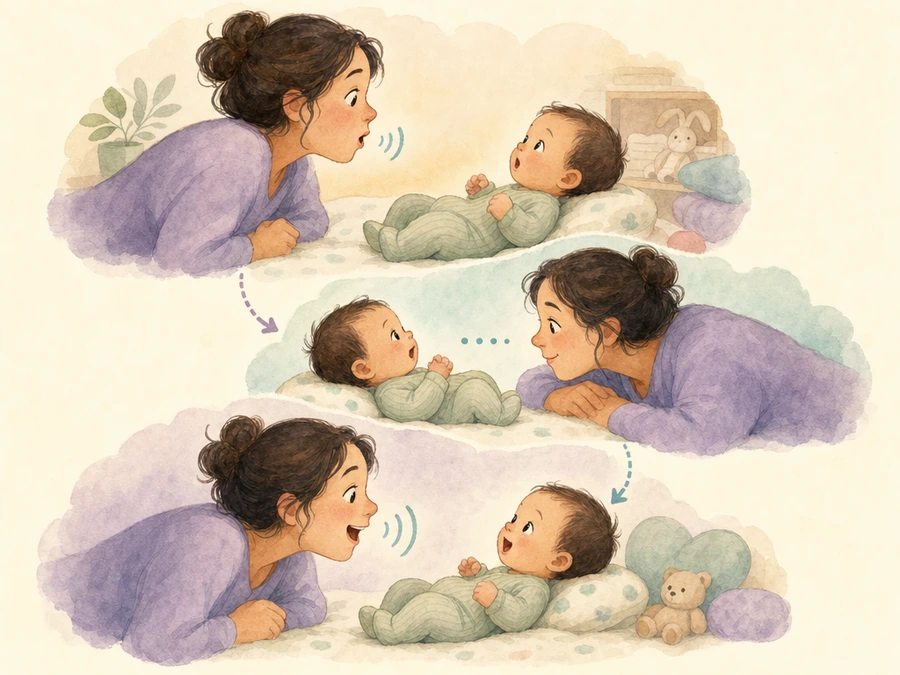
- Make one quiet sound while you look together, then wait.
- If your baby answers, copy their sound. If they look away, let that be the end of the turn.
Match the invitation to your baby
For a younger baby, a familiar face and a short look may be enough. Around six months, mirror interest is one of the observations included in the CDC checkpoint. That does not mean every session needs a smile or a laugh.
For a baby who enjoys repetition, keep the same expression or greeting. For a baby who seems overwhelmed, move back to face-to-face play without the mirror. You can return to it another day.
Enjoy the response without turning it into a test
Looking, touching, laughing, or turning back toward you are all things you can describe. An interested reaction does not establish that a baby recognizes the reflection as themselves.
The useful part of the game is the shared exchange. Harvard’s serve-and-return guidance describes responding to a child’s signals; it does not require special equipment or a perfectly timed response.
Save the detail that made you smile
If a second caregiver is there, they can take a photo while you stay close. If you are alone, finish playing before using your phone. A note about the expression you tried can be just as useful to your care circle.
“The surprised eyebrows were the favorite today. She watched the mirror, then turned back to look at me.”
Create an account or sign in to save photos, videos, and notes.
A few things you might be wondering
Do I need a special toy with lights or sounds?
No. A secure baby-safe mirror and your face are enough for these ideas. Start simply so you can notice what your baby is interested in.
What if my baby ignores the mirror?
Follow their interest. Try your own face, a familiar song, or a different activity. A single play session cannot tell you whether a developmental milestone is present or absent.
Should I try to get a smile for a photo?
Let the reaction happen naturally. Keep supervision first and stop when your baby wants a break, even if the camera missed the moment.
A little more to explore
4 months · 5 play ideas
Activities for your 4-month-old
Five gentle activities for a 4-month-old: sound games, easy reaching, short tummy play, songs, and picture-book chats.
Read the guide6 months · 5 play ideas
Activities for your 6-month-old
Five simple play ideas for your 6-month-old, with step-by-step instructions, everyday materials, and little moments to share with your care circle.
Read the guide
For your care circle · Notice, remember, share
How to record baby milestones when you missed the “first”
Keep useful milestone memories without guessing exact first dates. A simple approach for parents, grandparents, and nannies to share what they actually noticed.
Read the guideMeet CradleNote
One place for the people who care.
Share the day’s care, find activities to try together, and keep the memories your family makes along the way.
Currently free to download and use. Account required. iPhone app requires iOS 17 or later.
Where these ideas come from
Written by the CradleNote team. We combine our Growth catalog with the sources below, adding practical play adaptations and illustrative caregiver notes. Sources inform the guidance; they do not endorse CradleNote. This is educational content, not an individual clinical assessment.
- CDC · Milestones by 6 months
The age checkpoint and everyday developmental observations.
- Harvard Center on the Developing Child · Serve and return
Background on responsive, back-and-forth interaction.
Written by the CradleNote team for everyday play and observation. This guide is not a developmental screening tool, a diagnosis, or a treatment plan. Illustrations show play ideas; follow the written safety guidance and your child’s individual needs.
Questions or a correction? Contact the CradleNote team.