
Little moments of play · Around 4 months
Activities for your 4-month-old
For an awake, comfortable 4-month-old, try a sound exchange, an easy-to-reach rattle, a brief turn of supervised tummy play, or looking at one book picture together. Choose one idea and follow their interest.
By the CradleNote team
One idea is plenty
These are choices, not a daily checklist.
Let your baby lead
Awake, comfortable, and ready for a little play.
For everyone who cares
Easy to try. Lovely to share afterward.
A little inspiration for today
What feels right for this moment?
Start with one that catches your eye. The times are flexible; follow your baby’s interest and take a break whenever they need one.
5 of 5 ideas
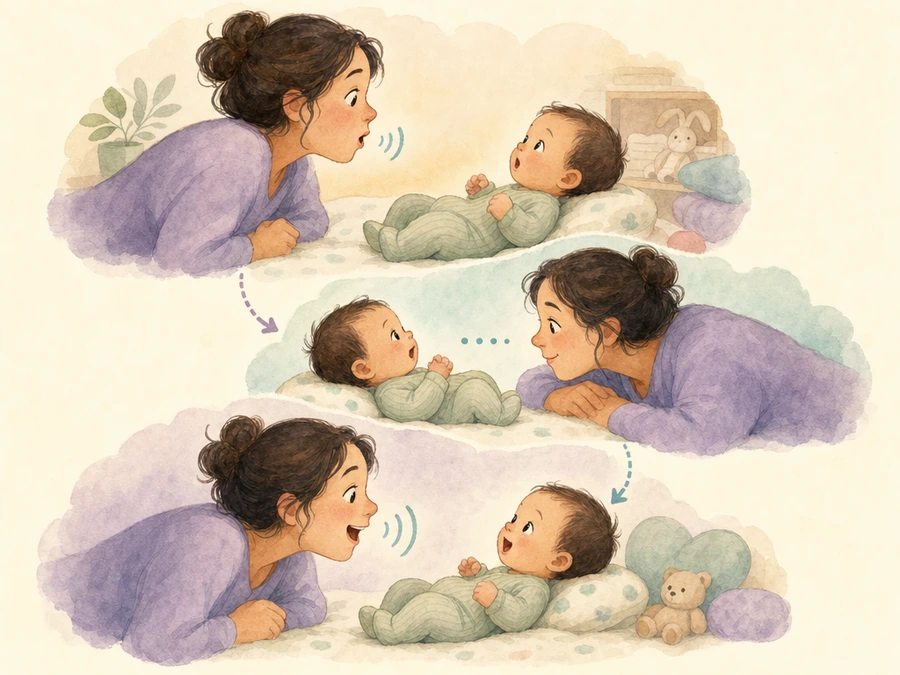
Coo-and-Pause
Leave room in the conversation for a tiny sound, a wiggle, or an attentive look.
You’ll needYou and your voice
How to play
- Settle face to face, with your baby comfortably supported.
- Make one soft vowel sound, then leave a quiet pause.
- Respond to what your baby actually does. Copy their sound or smile back at their look.
“Oh! I heard that little sound.”
Make it easier
Listen first. You can answer a sound they already make rather than asking for a new one.
What you might notice
A change in expression or a sound during your pause.
Keep it comfortable. Stay close while your baby is awake. Pause if they turn away, become tired, or seem uncomfortable.
A little moment to remember · optional
Write down the sound in your own words. Another caregiver may recognize it later.
Create an account or sign in to save photos, videos, and notes.

Rattle Reach Invitation
Offer one easy-to-hold toy and time to explore it at their own pace.
You’ll needA lightweight baby-safe rattle
How to play
- Let your baby see the rattle while lying comfortably on their back on a firm play surface.
- Offer it near an open hand, or where an easy arm movement can touch it.
- Wait. Describe a touch or grasp without moving their hand for them.
“Your hand found the rattle.”
Make it easier
Hold the rattle still where it is easy to see. Watching is a way to explore too.
What you might notice
Which hand moves toward the toy and what happens when it makes a sound.
Keep it comfortable. Use intact, age-appropriate objects with no small or loose parts. Stay within arm’s reach in a clear floor-level play space.
A little moment to remember · optional
A short note about a favorite toy can help the next caregiver choose what to offer.
Create an account or sign in to save photos, videos, and notes.

Tummy-Time Circle
A familiar face and one toy can make a short spell of floor play interesting.
You’ll needOne large baby-safe toy
How to play
- Choose an awake, comfortable moment and a clear, firm floor-level play area.
- Get down near your baby’s eye level and place one toy nearby.
- Let them look toward your face or the toy. End the turn when they need a change of position.
“I’m right here. There’s your toy.”
Make it easier
Use your face alone and keep the turn brief.
What you might notice
What they look toward, without timing how long they hold a position.
Keep it comfortable. Tummy play is only for awake, closely supervised time. Place babies on their backs for sleep; do not leave play objects in the sleep space.
A little moment to remember · optional
Tell your circle whether your face, a voice, or a toy made this turn enjoyable.
Create an account or sign in to save photos, videos, and notes.
Hand Discovery Song
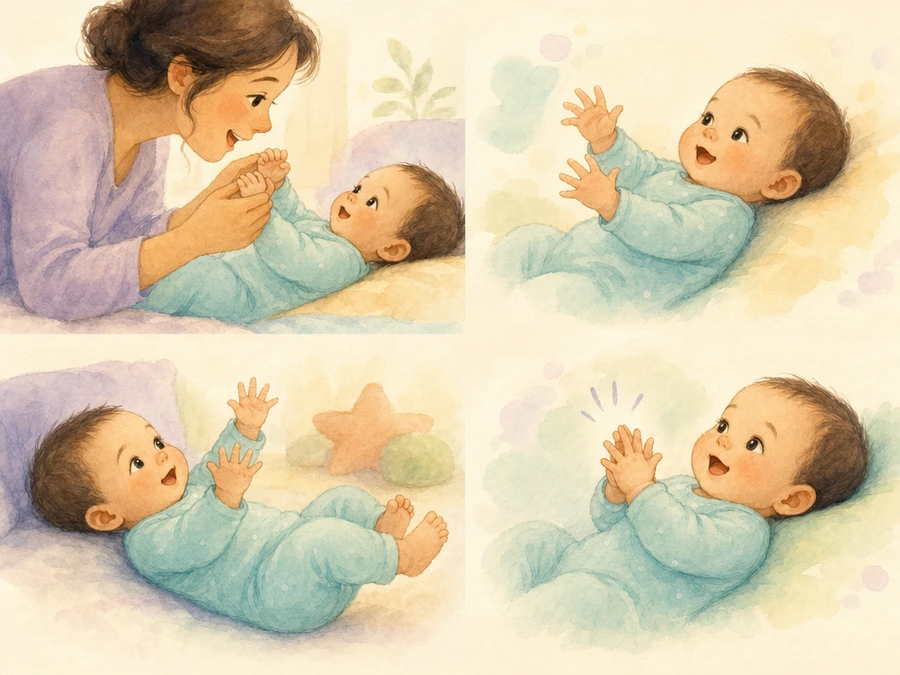
Turn a moment of noticing their hands into a little song you share.
You’ll needA familiar tune or your own words
How to play
- Notice when your baby’s hands come into view.
- Sing a short line about fingers, palms, or waving hands.
- Let the hands move freely and follow whatever catches your baby’s attention.
“Hello, little fingers. I can see you!”
Make it easier
Say one line instead of singing a whole song.
What you might notice
A glance toward a hand or a pause to watch it move.
Keep it comfortable. Never restrain the hands or force them together. Keep rings, cords, and small accessories out of reach.
A little moment to remember · optional
Share the silly words you used so someone else can sing them too.
Create an account or sign in to save photos, videos, and notes.

Picture Book Chat
Reading together can be one picture, one sound, and a pause.
You’ll needA sturdy board or cloth book
How to play
- Support your baby comfortably where you can both see a page.
- Name one picture and add a simple sound.
- Pause, then stay on that page or move on according to their interest.
“A dog. Woof, woof!”
Make it easier
Use a single clear picture and a quiet voice.
What you might notice
Which picture they return to or reach toward.
Keep it comfortable. Supervise handling and mouthing. Use an intact book without detachable decorations or torn pieces.
A little moment to remember · optional
Remember a favorite page rather than how many pages you finished.
Create an account or sign in to save photos, videos, and notes.
Notice the little things, without making play a test.
An ordinary exchange can give you something concrete to describe: a sound back to you, a hand exploring a toy, or interest in a picture. The CDC’s four-month guide provides the developmental context; this play menu is not a checklist.
Enjoying an activity doesn’t establish a milestone or assess development. Share concerns or any loss of skills with your child’s clinician. You can record what you saw today even if you don’t know when it first happened.
See the CDC’s 4-month developmental guideBring your people into the moment
A small note can make someone’s day.
A grandparent, nanny, or partner can pick up the same idea later. Share the activity and what your baby enjoyed. A photo or video is lovely when it’s practical, and a sentence counts too.
An example from a day together
“The dog page held her attention today. I said ‘woof’ once and waited. She looked at me, then back at the book.”
Something you tried. Something you noticed. Enough to bring the next person in.
A few things you might be wondering
How many activities does a 4-month-old need each day?
There is no daily checklist in this guide. Choose an idea that fits an ordinary awake moment. The suggested times are flexible; a brief exchange can be enough, and familiar play is welcome.
What if my baby doesn’t do what the activity describes?
Make the invitation simpler or stop. Looking, listening, touching, or watching you can be their way of joining in. An activity is not a developmental assessment; bring concerns or any loss of skills to your child’s clinician.
Can another caregiver try the same activity?
Yes. Share the setup, what held your baby’s attention, and when they wanted a break. Let the next caregiver find their own rhythm. A sentence about the experience is useful even without a photo.
A little more to explore
A closer look at play · Floor time together
Tummy-time play: simple ideas for awake moments
Make supervised tummy time a shared moment with a familiar face, a simple sound, or a nearby toy, with clear safety guidance and flexible ways to try.
Read the guide
A closer look at play · Faces & connection
Mirror play for babies: three simple ways to try it
A practical guide to baby mirror play: a safe setup, three gentle games, ways to follow your baby’s interest, and a moment to share afterward.
Read the guide6 months · 5 play ideas
Activities for your 6-month-old
Five simple play ideas for your 6-month-old, with step-by-step instructions, everyday materials, and little moments to share with your care circle.
Read the guideKeep the little moments connected
More ideas for your baby. More moments for your circle.
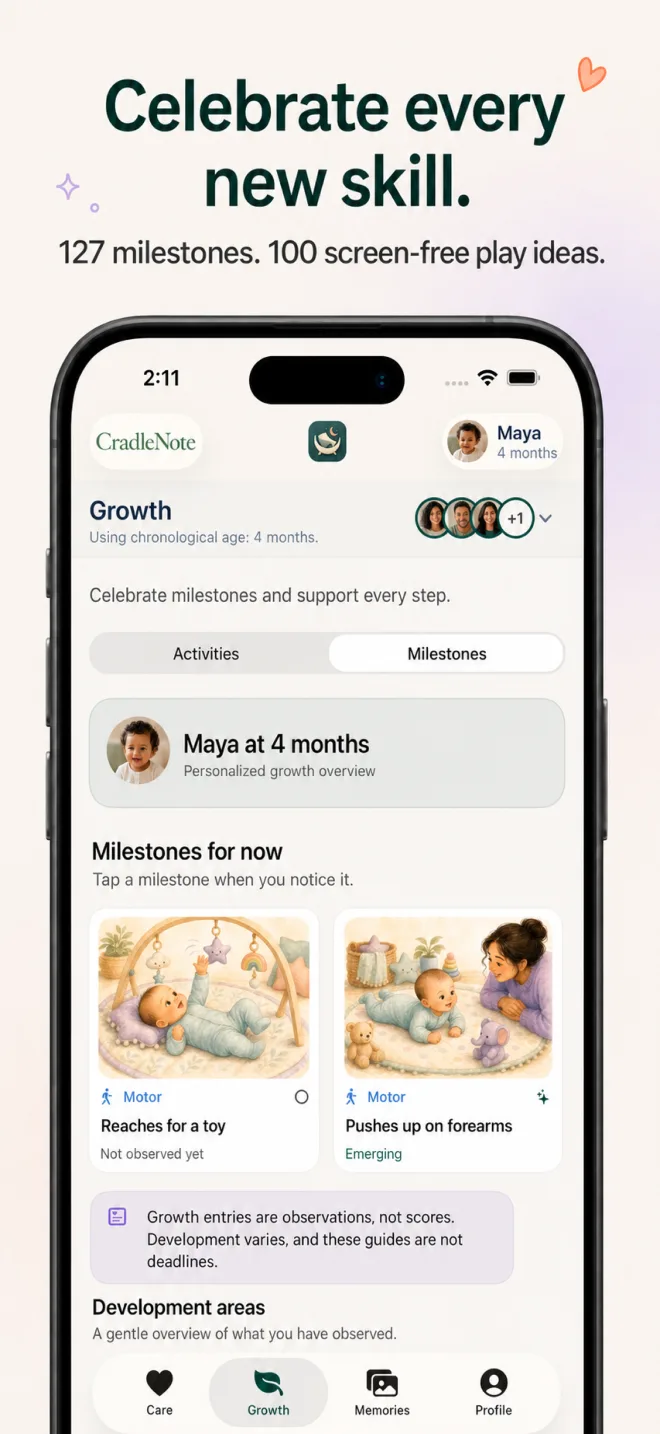
CradleNote brings age-appropriate activities, milestone observations, daily care, and private family memories into one shared place. Everyone you invite can contribute to the story.
Currently free to download and use. Account required. iPhone app requires iOS 17 or later.
Where these ideas come from
Written by the CradleNote team. We combine our Growth catalog with the sources below, adding practical play adaptations and illustrative caregiver notes. Sources inform the guidance; they do not endorse CradleNote. This is educational content, not an individual clinical assessment.
- CDC · Milestones by 4 months
The age checkpoint and everyday developmental observations.
- Harvard Center on the Developing Child · Serve and return
Background on responsive, back-and-forth interaction.
- American Academy of Pediatrics · Back to sleep, tummy to play
Awake, closely supervised tummy play and the distinction from sleep.
Written by the CradleNote team for everyday play and observation. This guide is not a developmental screening tool, a diagnosis, or a treatment plan. Illustrations show play ideas; follow the written safety guidance and your child’s individual needs.
Questions or a correction? Contact the CradleNote team.