
Little moments of play · Around 12 months
Activities for your 12-month-old
For a 12-month-old, try an action rhyme, putting a large block in a bowl, naming things on a stroll, modeling a familiar gesture, or following their choices in a board book. None of these ideas requires independent walking.
By the CradleNote team
One idea is plenty
These are choices, not a daily checklist.
Let your baby lead
Awake, comfortable, and ready for a little play.
For everyone who cares
Easy to try. Lovely to share afterward.
A little inspiration for today
What feels right for this moment?
Start with one that catches your eye. The times are flexible; follow your baby’s interest and take a break whenever they need one.
5 of 5 ideas
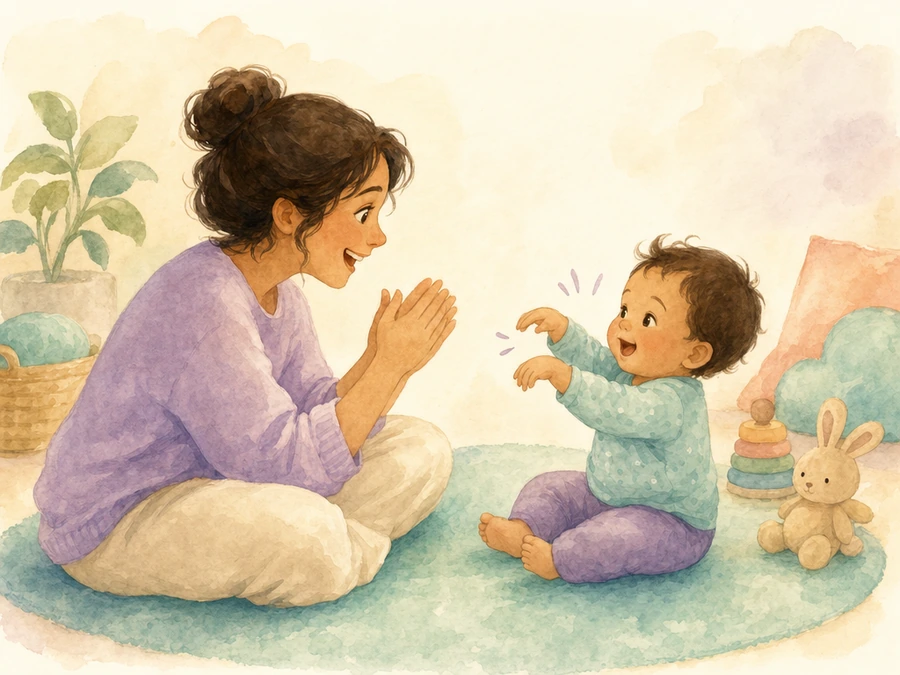
Pat-a-Cake Turn-Taking
A familiar rhyme gives you both a turn to join the rhythm.
You’ll needA rhyme your family enjoys
How to play
- Sing slowly and demonstrate the clapping with your own hands.
- Pause before a familiar action.
- Welcome a clap, a movement, or a look, then continue together.
“Ready? Here comes our clap!”
Make it easier
Use one repeated action and a short line.
What you might notice
Anticipation before a favorite part of the rhyme.
Keep it comfortable. Model rather than moving your baby’s hands. Stop if they pull away.
A little moment to remember · optional
Tell your circle which rhyme got a response and how you sang it.
Create an account or sign in to save photos, videos, and notes.
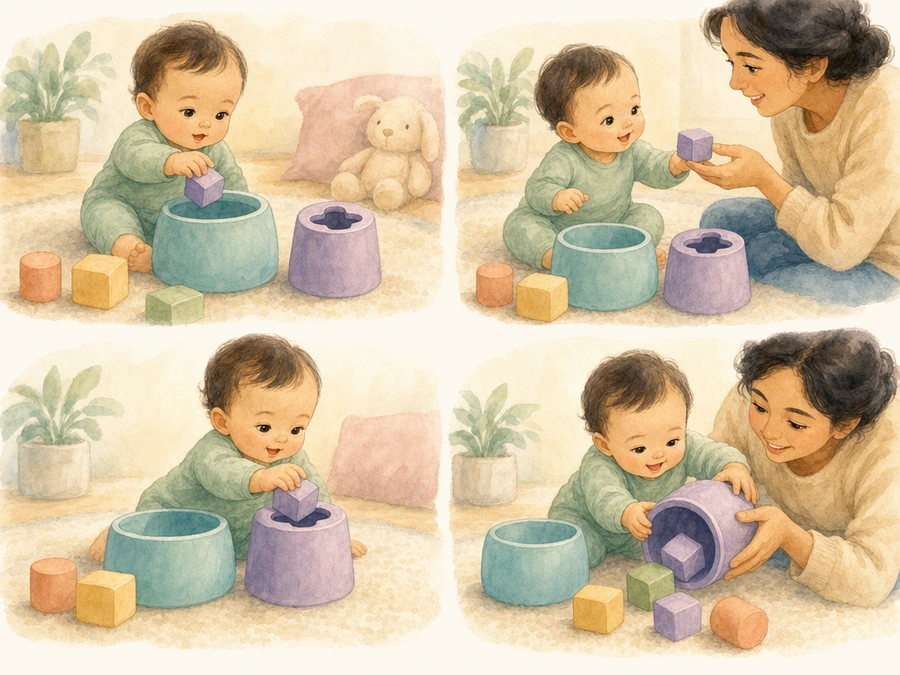
Block-in-the-Cup
A block going into a bowl can become a game worth repeating.
You’ll needLarge blocks and a wide unbreakable bowl
How to play
- Put the bowl within easy reach during supervised floor play.
- Drop one block in, then offer another block.
- Wait for their idea. Tip the bowl out together whenever they want to begin again.
“In it goes. Now it’s out!”
Make it easier
Use a wider, lower container and just one block.
What you might notice
A deliberate release or an interest in repeating the action.
Keep it comfortable. Use intact, age-appropriate objects with no small or loose parts. Stay within arm’s reach in a clear floor-level play space.
A little moment to remember · optional
A photo of the little setup afterward can accompany a note about what happened.
Create an account or sign in to save photos, videos, and notes.
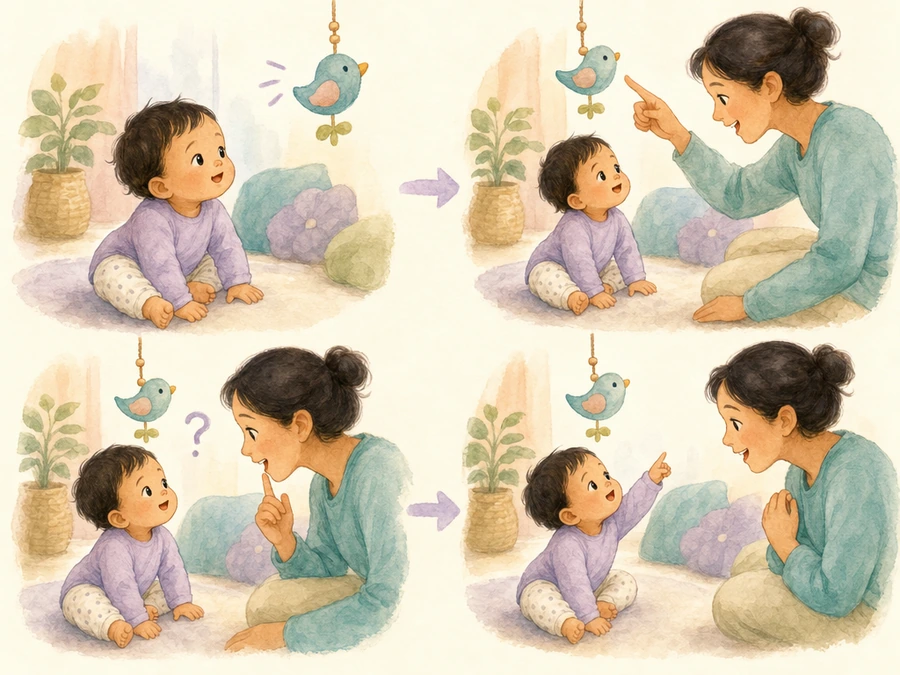
Point-and-Name Stroll
Follow a glance toward a tree, a bird, or a bright window and give it a name.
You’ll needWhatever catches your baby’s eye
How to play
- Notice what your baby watches while safely carried or seated.
- Point and name that thing in a few words.
- Wait for a gesture, sound, or change of interest before continuing.
“A tree. The leaves are moving.”
Make it easier
Stay in one familiar spot and name one thing.
What you might notice
A shared glance or a gesture toward the same object.
Keep it comfortable. Keep safe support and supervision throughout. Do not offer unknown plants or small outdoor objects to handle or mouth.
A little moment to remember · optional
Name a favorite sight in a note so another caregiver can look for it together.
Create an account or sign in to save photos, videos, and notes.
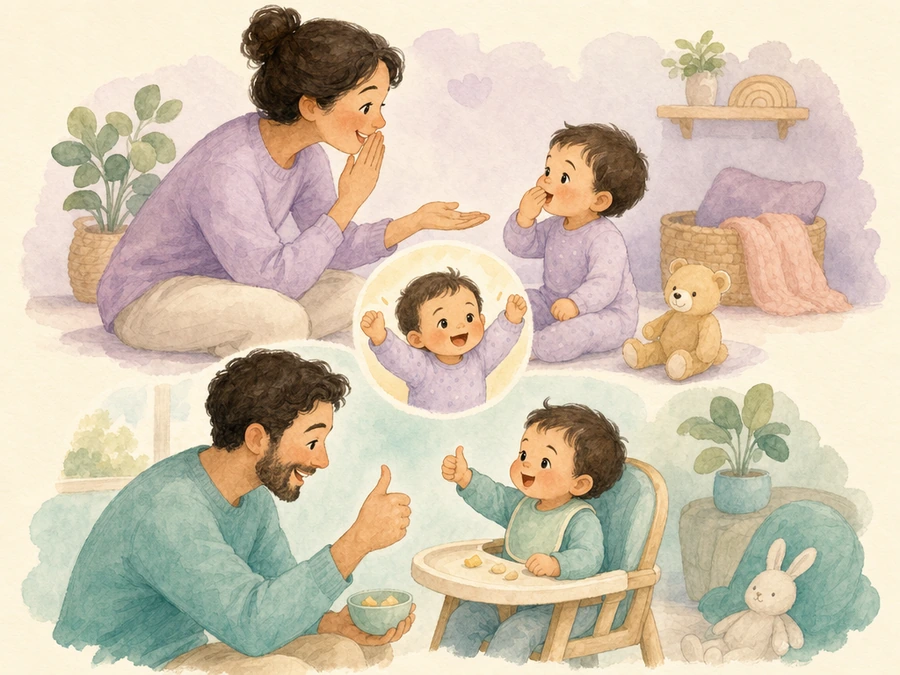
First Gestures Game
Choose a gesture that belongs in a real routine, such as a wave at the door.
You’ll needAn everyday arrival or goodbye
How to play
- Choose a calm, ordinary moment for the gesture.
- Wave your own hand and use the same short phrase.
- Give your baby space to respond in their own way. Keep the goodbye predictable.
“Bye-bye! See you soon.”
Make it easier
Use the words and gesture once, without asking for a repeat.
What you might notice
A small hand movement or attention to the familiar routine.
Keep it comfortable. Never force their hands or stage a distressing departure to get a reaction.
A little moment to remember · optional
Record what the gesture looked like and who was there, without needing to call it the first wave.
Create an account or sign in to save photos, videos, and notes.
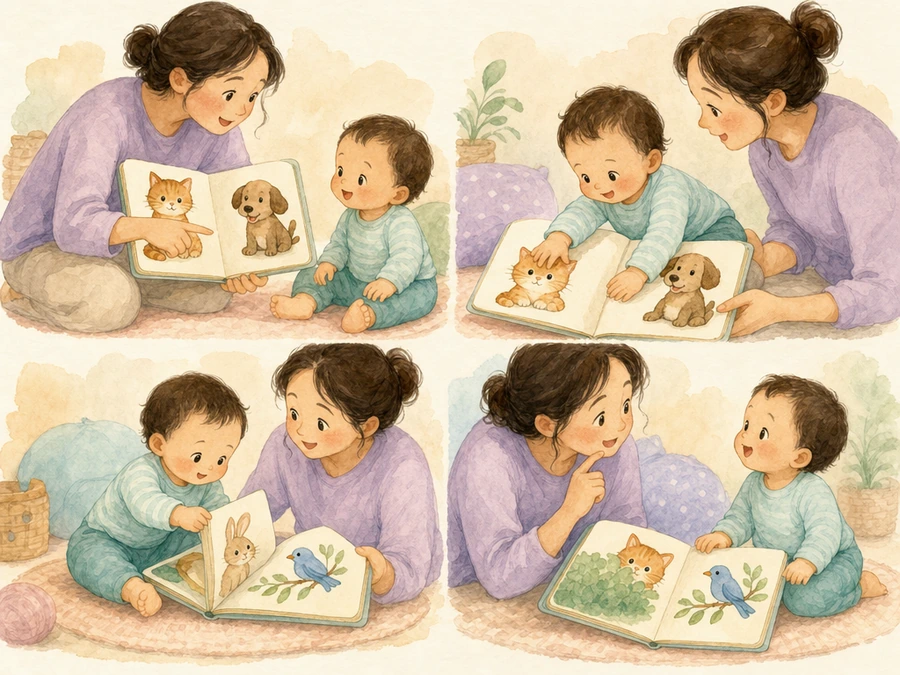
Point-and-Chat Book
Let the reader choose the page, even if it is the same one again.
You’ll needA sturdy board book with clear pictures
How to play
- Open the book where your baby can touch it comfortably.
- Name a picture they look at or point toward.
- Follow their page turning and add a sound or a short comment. You can skip the printed story.
“You found the cat again. Meow!”
Make it easier
Keep one favorite page open and talk about it.
What you might notice
A chosen picture, a gesture, or a sound that returns across readings.
Keep it comfortable. Use an intact book without loose pieces and supervise mouthing.
A little moment to remember · optional
Share the favorite page with your circle; it gives the next reader a lovely starting point.
Create an account or sign in to save photos, videos, and notes.
Notice the little things, without making play a test.
Describe the action you saw rather than assigning a result: a block released into a bowl, an offered gesture, or a shared game. Use the CDC’s one-year checkpoint for developmental context and discuss concerns with your child’s clinician.
Enjoying an activity doesn’t establish a milestone or assess development. Share concerns or any loss of skills with your child’s clinician. You can record what you saw today even if you don’t know when it first happened.
See the CDC’s 12-month developmental guideBring your people into the moment
A small note can make someone’s day.
A grandparent, nanny, or partner can pick up the same idea later. Share the activity and what your baby enjoyed. A photo or video is lovely when it’s practical, and a sentence counts too.
An example from a day together
“She kept choosing the cat page, so we stayed there. Grandpa can try the same book later; no need to finish the story.”
Something you tried. Something you noticed. Enough to bring the next person in.
A few things you might be wondering
Does my baby need to walk to enjoy these activities?
No. These ideas work during comfortably supported seated play, shared reading, or an ordinary outing with safe support. Choose the position and setup that suit your child today.
How many activities does a 12-month-old need each day?
There is no daily checklist in this guide. Choose an idea that fits an ordinary awake moment. The suggested times are flexible; a brief exchange can be enough, and familiar play is welcome.
What if my baby doesn’t do what the activity describes?
Make the invitation simpler or stop. Looking, listening, touching, or watching you can be their way of joining in. An activity is not a developmental assessment; bring concerns or any loss of skills to your child’s clinician.
Can another caregiver try the same activity?
Yes. Share the setup, what held your baby’s attention, and when they wanted a break. Let the next caregiver find their own rhythm. A sentence about the experience is useful even without a photo.
A little more to explore
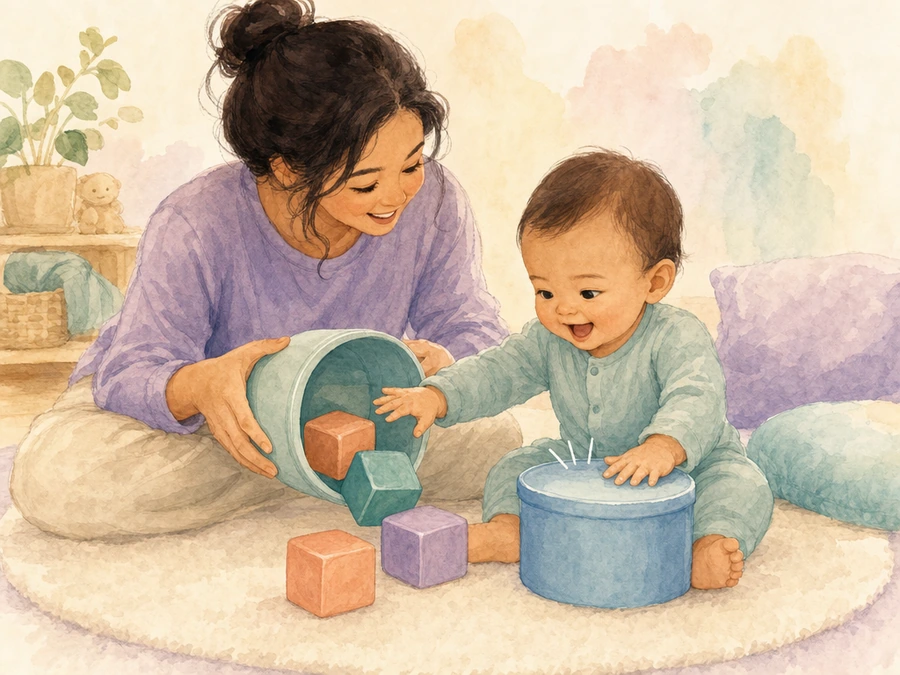
9 months · 5 play ideas
Activities for your 9-month-old
Five simple activities for a 9-month-old, including toy hide-and-find, container play, babbling, taking turns, and supported floor play.
Read the guide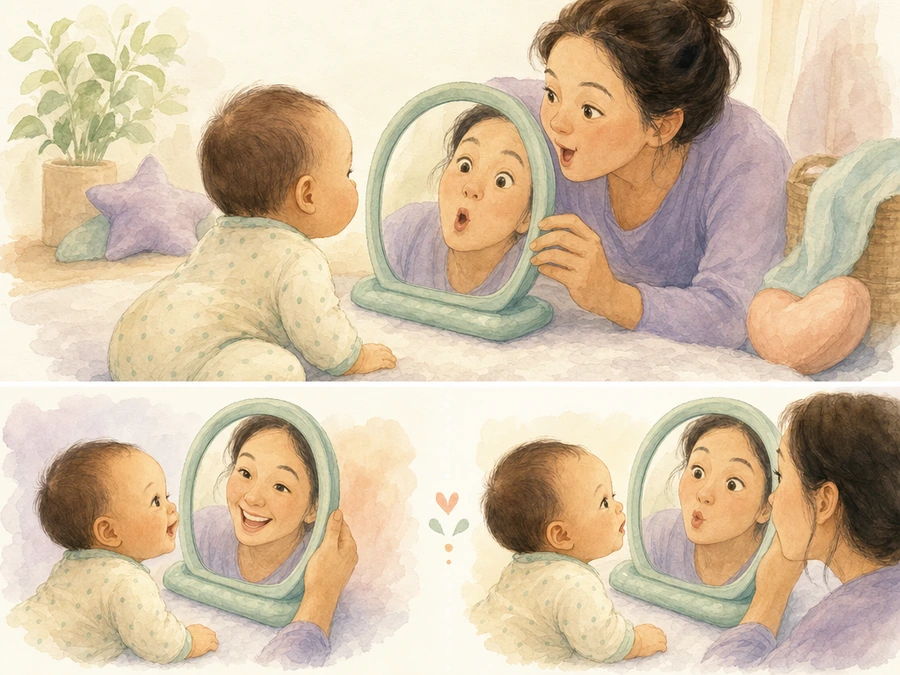
A closer look at play · Faces & connection
Mirror play for babies: three simple ways to try it
A practical guide to baby mirror play: a safe setup, three gentle games, ways to follow your baby’s interest, and a moment to share afterward.
Read the guideFor your care circle · Notice, remember, share
How to record baby milestones when you missed the “first”
Keep useful milestone memories without guessing exact first dates. A simple approach for parents, grandparents, and nannies to share what they actually noticed.
Read the guideKeep the little moments connected
More ideas for your baby. More moments for your circle.
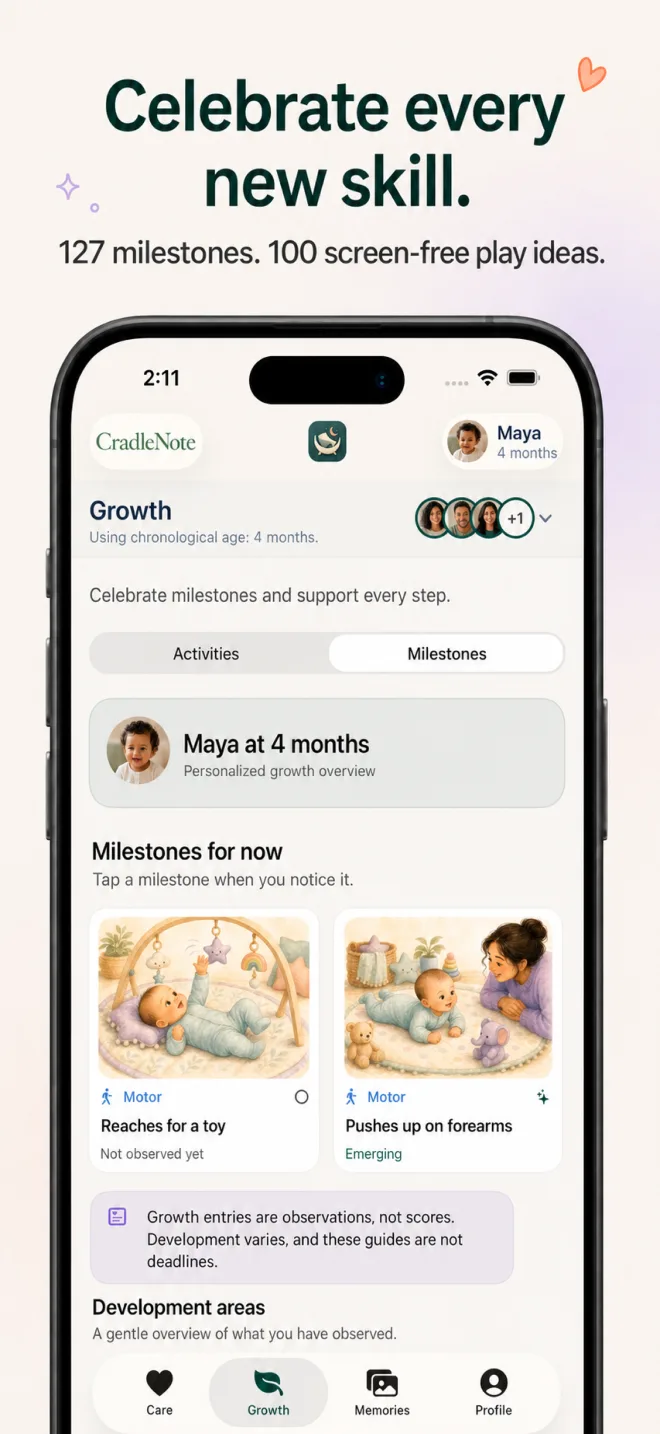
CradleNote brings age-appropriate activities, milestone observations, daily care, and private family memories into one shared place. Everyone you invite can contribute to the story.
Currently free to download and use. Account required. iPhone app requires iOS 17 or later.
Where these ideas come from
Written by the CradleNote team. We combine our Growth catalog with the sources below, adding practical play adaptations and illustrative caregiver notes. Sources inform the guidance; they do not endorse CradleNote. This is educational content, not an individual clinical assessment.
- CDC · Milestones by 1 year
The age checkpoint and everyday developmental observations.
- Harvard Center on the Developing Child · Serve and return
Background on responsive, back-and-forth interaction.
Written by the CradleNote team for everyday play and observation. This guide is not a developmental screening tool, a diagnosis, or a treatment plan. Illustrations show play ideas; follow the written safety guidance and your child’s individual needs.
Questions or a correction? Contact the CradleNote team.